RICE!!!
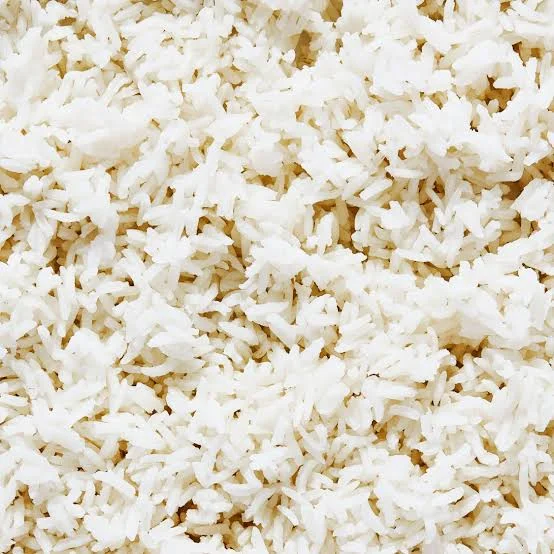
Rice. Beautiful fluffy delicious rice. I scream, you scream, we all scream for rice cream. Rice is a classic staple food in many households across the many contents and countries around the globe. It’s a great source of grain and the labour required provides jobs for many people. We love rice!
Environment & Surroundings
Rice grows in warm climates at approximately 20-37 degrees Celsius. Rice needs a wet and humid environment to grow. It grows in areas that generally have 150-300 cm of rainfall annually.
Other vegetation grown in these areas includes reeds, water hyacinth and other semi-aquatic plants.
In the particularly flooded areas where rice is grown you can find a lot of aquatic creators/ amphibians. This includes frogs, loaches and even small fish. Some water dependent birds will also live in some of the less flooded areas. Some of these birds include herons, storks and ibises (Bin Chickens). Finally there are also a lot of insects that live in these biomes such as dragon flies, water beetles and a lot more. With all this in consideration wetlands are very lively areas.
Farming
For farming, many rivers are diverged or blocked by damns. Because of this purposeful flooding of particular areas, the soil can become anaerobic, which means it lacks oxygen. The bacterium in the anaerobic soil is one of the main causes of methane pollution in agriculture globally.
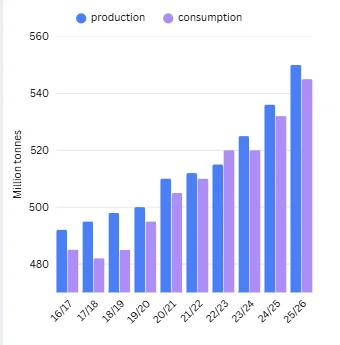
For the 25/26 financial year, approximately 550 million tonnes of rice was produced annually; with about 545 million of those tonnes being consumed. This beat a new record for production of rice. (USDA)
Rice farming is one of the most Labor-intensive foods to grow. It takes millions of employees annually to grow and harvest it. It requires even more employees during the transplant and harvesting periods of each season, especially in south/southeast Asia. 45% of production costs go into employees pay checks. For countries such as India, Thailand and Vietnam exporting and selling rice to other countries is a major contributor to their economy. This year these countries are collectively projected to produce about 62.8 million tonnes of rice. (AESSRA)
The steps of growing rice
Firstly, the land is prepared by being ploughed to get it level. This land is then enclosed into small banks so that they can hold the water.
There are 2 ways of planting the seeds. The more common way which is used in the US, Australia and China is to drill the seeds straight into the ground (DSR). The second way is less common but is still used in some parts of Asia. For this method the seeds are firstly grown in a nursery bed for up to 4 weeks. After this the seedlings are then transferred into the main fields. This method uses a lot more time. Also, a lot more labour is required, especially during the growing season.
Enviromental impact and solution
Rice farming produces approximately 45% of all agricultural greenhouse gasses (GHG) and contributes 1.5% of all GHG globally. This is mostly due to the continuous flooding of the fields, as it only takes a couple years to completely alter the chemistry of the soil.
One very promising technique that is used to grow rice more sustainably is called Alternate Wetting and Drying (AWD), This is the re-flooding of fields instead of continually flooding. This is already in place in multiple parts of the world.
This is a great solution because it has been proven to reduce GHG emissions by 50% and reduce the costs of continuous flooding for the farmers by 30%. (Science Direct) It also is better for maintaining healthy soil and therefore a field can be used for longer. It also does not reduce the amount of labour required meaning everyone can keep their jobs. This is a very rare win-win-win-win scenario.
References
Gao R, Zhuo L, Duan Y, Yan C, Zhao Z, Wu P & Yue Z (15 June 2024) Effects of alternate wetting and drying irrigation on yield, water-saving, and emission reduction in rice fields: A global meta-analysis, ScienceDirect, accessed 21 August 2026.
https://www.sciencedirect.com/science/article/abs/pii/S0168192324001904
Childs N and Abadam V (2025) Rice Outlook: December 2025 [PDF], USDA, accessed 21 August 2026.
https://ers.usda.gov/sites/default/files/_laserfiche/outlooks/113584/RCS-25K.pdf?v=55355
Mohanty S, Baruah S & Janaiah A (7 December 2020) The Asian Rice Sector at a Crossroads, Aessra, accessed 21 August 2026.
https://ndpublisher.in/files/html/ea-65-4-014.html
Implementing sustainable rice cultivation practices (1 January 2001), Food Forward, accessed 21 August 2026.